Industrial Communication Module for Premium PLC Platforms
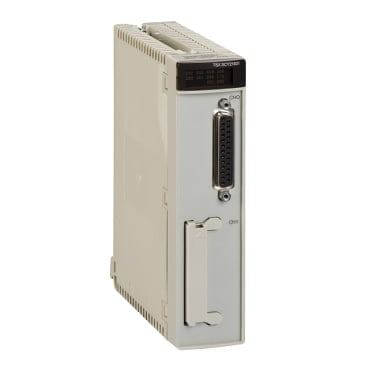
In modern automation systems, reliable communication is essential for seamless coordination between controllers, field devices, and supervisory systems. Industrial communication modules play a critical role by enabling data exchange across various components within a programmable control platform. These modules ensure that information flows accurately and efficiently, supporting real-time control, monitoring, and diagnostics.
For high-end programmable logic controller platforms, communication modules are designed to meet demanding performance, reliability, and scalability requirements. Their integration enables complex industrial systems to operate as unified, intelligent networks.
Role of Communication Modules in PLC Systems
Enabling Data Exchange
Communication modules act as the interface that allows controllers to exchange data with other controllers, sensors, actuators, and monitoring systems. They manage data transmission, protocol handling, and signal timing to ensure consistent and accurate communication.
Supporting Distributed Control Architectures
In large industrial environments, control systems are often distributed across multiple locations. Communication modules enable decentralized control by allowing controllers to share information across networks, improving flexibility and system resilience.
Key Features of Industrial Communication Modules
High-Speed Data Transmission
Industrial processes often require fast and deterministic communication. Communication modules are engineered to support high data rates with minimal latency, ensuring timely responses to process changes.
Robust Network Reliability
Reliable communication is essential for maintaining continuous operations. Communication modules include error detection, data validation, and redundancy features that help prevent data loss and ensure stable network performance.
Secure Data Handling
Industrial networks must be protected from unauthorized access and data corruption. Communication modules support secure communication methods that help safeguard system integrity.
Integration with Premium PLC Platforms
Seamless System Compatibility
Communication modules are designed to integrate smoothly with premium programmable controller platforms. Standardized hardware interfaces and software configuration tools simplify installation and commissioning.
Modular Expansion Capabilities
Modular designs allow communication modules to be added or replaced without disrupting the entire system. This scalability supports future system expansion and technology upgrades.
Communication Protocol Support
Flexible Protocol Compatibility
Industrial communication modules support a wide range of standard communication protocols. This flexibility allows systems to connect with various devices and networks, reducing integration complexity.
Interoperability Across Systems
By supporting open communication standards, communication modules enable interoperability between different control systems and equipment. This ensures efficient data sharing across diverse industrial environments.
Diagnostic and Monitoring Functions
Real-Time Network Status Monitoring
Communication modules provide real-time insights into network performance. Status indicators and diagnostic tools allow operators and engineers to quickly assess communication health.
Fault Detection and Troubleshooting
Advanced diagnostic features help identify issues such as connection failures, data errors, or network congestion. Early detection reduces downtime and simplifies maintenance procedures.
Industrial Durability and Reliability
Operation in Harsh Environments
Industrial communication modules are built to withstand extreme temperatures, electrical noise, vibration, and humidity. Rugged construction ensures reliable operation in demanding conditions.
Long-Term Operational Stability
High-quality components and robust design contribute to long service life. Communication modules are engineered for continuous operation, minimizing maintenance needs and replacement costs.
Applications of Industrial Communication Modules
Manufacturing Automation
In manufacturing environments, communication modules enable coordination between machines, production lines, and control systems. Reliable communication improves efficiency, quality, and production throughput.
Process Control Industries
Process industries rely on accurate data exchange for monitoring and controlling complex operations. Communication modules support real-time data sharing, ensuring stable and safe process control.
Energy and Infrastructure Systems
In energy generation, distribution, and infrastructure monitoring, communication modules enable centralized oversight and rapid response to changing conditions. Reliable communication enhances operational safety and system efficiency.
Safety and Performance Advantages
Supporting Safety Systems
Communication modules play a role in transmitting safety-related data between control components. Reliable communication ensures timely execution of safety functions and protective measures.
Enhancing System Performance
Efficient data exchange improves overall system responsiveness. Communication modules help optimize control strategies, reduce delays, and enhance operational performance.
Maintenance and Lifecycle Benefits
Simplified Maintenance Procedures
Clear diagnostics and modular design simplify maintenance tasks. Technicians can quickly isolate and resolve communication issues, reducing system downtime.
Adaptability to Future Needs
Communication modules support firmware updates and configuration changes, allowing systems to adapt to evolving operational requirements and technological advancements.
Future Trends in Industrial Communication Technology
Increased Network Intelligence
Future communication modules are expected to incorporate advanced analytics and diagnostics, enabling predictive maintenance and smarter network management.
Enhanced Cybersecurity Features
As industrial networks become more connected, communication modules will continue to evolve with stronger cybersecurity measures to protect critical infrastructure.
Conclusion
An industrial communication module is a vital component of premium programmable logic controller platforms. By enabling fast, reliable, and secure data exchange, these modules support efficient control, monitoring, and system integration. Their robust design, advanced diagnostics, and flexible communication capabilities make them suitable for demanding industrial environments. As automation systems continue to grow in complexity, industrial communication modules will remain essential for building scalable, reliable, and future-ready control networks.