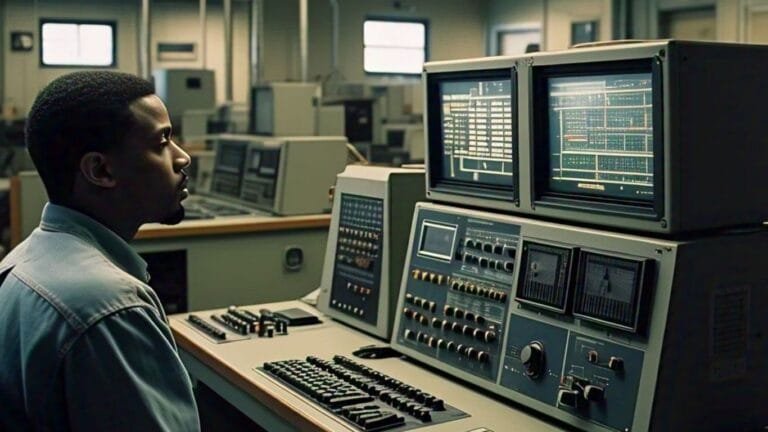
Why Industrial Grade Displays Matter For Continuous Operation Applications Today
Industrial environments demand technology that performs reliably under constant stress. Unlike consumer electronics, systems used in manufacturing plants, power facilities, transportation hubs, and process industries must operate continuously with minimal downtime. Among these systems, displays play a critical role by providing operators with real-time data, alerts, and control interfaces. Solutions such as the 557VCM76110 FS Modicon Schneider Automation 19″ Monitor are designed to meet these demands, offering the stability, clarity, and long-term durability required for nonstop industrial operations.
Understanding Continuous Operation Environments
What Continuous Operation Really Means
Continuous operation refers to systems that run 24 hours a day, seven days a week, often for years without shutdown. In such environments, even a brief failure can lead to production losses, safety risks, or system-wide disruptions. Displays in these settings are always active, constantly refreshing information and supporting decision-making.
Common Challenges in Industrial Settings
Industrial locations expose equipment to heat, dust, vibration, electrical noise, and fluctuating power conditions. Consumer-grade screens are not built to handle these factors long-term. Industrial grade displays, on the other hand, are engineered to withstand harsh conditions while maintaining consistent performance.
The Role of Displays in Mission-Critical Operations
Central Interface for Operators
Displays serve as the visual bridge between complex systems and human operators. They show alarms, process values, system statuses, and performance trends. If a display fails or becomes unreadable, operators lose visibility and control, increasing the risk of errors.
Impact on Safety and Productivity
Clear and reliable visual information helps operators respond quickly to abnormal conditions. Industrial grade displays are designed for high brightness, wide viewing angles, and stable image quality, ensuring information remains visible even in challenging lighting conditions.
Why Industrial Grade Displays Outperform Standard Screens
Designed for Longevity
Industrial displays are built with components rated for long operational lifespans. Backlights, panels, and internal electronics are selected to support tens of thousands of operating hours without significant degradation. This durability reduces replacement frequency and maintenance costs.
Resistance to Environmental Stress
Unlike office or home displays, industrial units often feature reinforced housings, sealed enclosures, and specialized coatings. These features protect against dust, moisture, and vibration, allowing displays to function reliably in demanding environments.
Performance Consistency Over Time
Stable Image Quality
Over long periods of use, standard displays may suffer from color fading, uneven brightness, or screen burn-in. Industrial grade displays are designed to minimize these issues, maintaining consistent image quality throughout their service life.
Reliable Touch and Control Interaction
Many industrial displays include touch interfaces used for system control. Industrial-grade touch technologies are built to withstand repeated use, gloved operation, and exposure to contaminants, ensuring accurate input even after years of operation.
Integration With Industrial Control Systems
Compatibility With Automation Infrastructure
Industrial displays are engineered to integrate smoothly with control systems and communication networks commonly used in automation environments. This compatibility ensures stable data exchange and reliable system visualization.
Supporting Complex Data Visualization
Modern industrial operations generate large volumes of data. Industrial displays are optimized to present complex graphics, trends, and dashboards clearly, helping operators make informed decisions quickly.
Reliability and Downtime Reduction
Minimizing Operational Interruptions
In continuous operation environments, downtime is costly. Industrial grade displays are tested for reliability under constant use, reducing the risk of unexpected failures that could halt operations.
Lower Total Cost of Ownership
While industrial displays may have higher initial costs, their long lifespan, reduced maintenance needs, and reliable performance result in lower total cost of ownership over time. This makes them a practical investment for critical applications.
Importance of Power and Signal Stability
Handling Power Fluctuations
Industrial environments often experience voltage variations and electrical noise. Industrial grade displays include robust power management and shielding to maintain stable operation under these conditions.
Ensuring Signal Integrity
Stable signal processing ensures that displayed information remains accurate and responsive. Industrial displays are designed to handle continuous data streams without lag or distortion, which is essential for real-time monitoring.
Specialized Industrial Display Applications
Control Rooms and Monitoring Stations
In control rooms, displays may run continuously for years. Industrial grade displays ensure consistent readability, supporting operators who rely on visual data for system oversight.
Manufacturing and Process Automation
On production floors, displays guide operators through processes, display machine status, and highlight alarms. Their durability and clarity directly affect operational efficiency and quality control.
Example of Industrial Display Integration
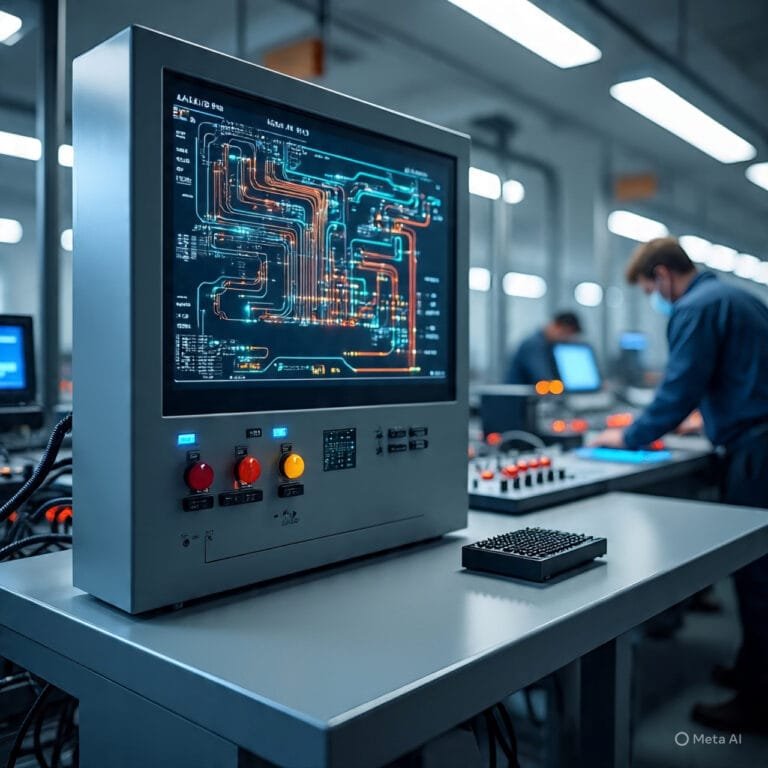
In one industrial setup, a control panel incorporated the 557VCM76110 FS Modicon Schneider Automation 19″ Monitor within a continuous operation system, where the display functioned as the primary visual interface for monitoring real-time process data. Its role highlighted how industrial-grade design supports long-term stability, consistent visibility, and reliable operator interaction in environments where uninterrupted performance is essential.
Future Demands for Industrial Displays
Increasing Automation and Data Visibility
As industries move toward higher automation levels, the need for reliable visual interfaces will continue to grow. Displays must handle more data, higher resolutions, and constant use without compromising performance.
Sustainability and Long-Term Use
Industrial grade displays support sustainability goals by reducing waste through longer service life and fewer replacements. Their durability aligns with the need for efficient resource utilization in modern industries.
Conclusion
Industrial grade displays are not optional components in continuous operation environments; they are essential. Their ability to deliver reliable performance, maintain image quality, and withstand harsh conditions directly impacts safety, productivity, and operational efficiency. By investing in displays designed for nonstop use, industries ensure that operators remain informed and in control at all times, even under the most demanding conditions.
In advanced automation systems, components such as SCHNEIDER ELECTRIC BMXXBE1000 often rely on dependable visual interfaces to support data communication and monitoring, reinforcing the importance of industrial grade displays as a foundational element of reliable continuous operation infrastructures.