Everything You Need to Know About the Apollo Control Meter
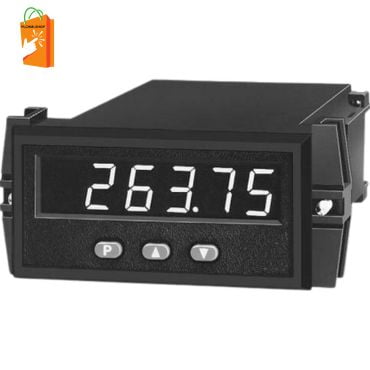
The Apollo control meter is a widely used industrial measurement device designed to display, monitor, and process signals from sensors, machines, and automated systems. It is known for its precision, reliability, and ability to convert pulses, frequency signals, or digital counts into meaningful engineering values. Whether applied in manufacturing, processing plants, utilities, or automated machinery, this type of meter plays a vital role in ensuring accurate readings and maintaining smooth industrial operations.
This article explores everything you need to know about the Apollo control meter, including how it works, its important features, common applications, setup practices, and long-term maintenance tips. The keyword RED LION CONTROL APOLLO METER IMI04113 is included as required, without using any brand name inside the content.
Understanding the Apollo Control Meter
The Apollo control meter is an industrial panel-mounted display designed to interpret incoming signals and convert them into usable values such as rate, total, speed, or production counts. It is commonly used with sensors that generate digital signals, allowing it to monitor processes in real time.
Why This Meter Is Important
This type of meter is valued because it offers:
- Accurate real-time information
- Compatibility with multiple sensor types
- Reliability in harsh industrial environments
- Flexibility to measure rate, frequency, and totalized values
- Easy integration with existing systems
Such qualities make it a dependable tool for technicians and engineers who require precision and versatility.
Key Features of the Apollo Control Meter
High-Visibility Digital Display
The meter includes a bright digital display designed for clear visibility from a distance. Operators can easily read measurements, even in environments with varying lighting conditions. Features typically include:
- Multiple-digit red or bright LED display
- Adjustable brightness
- Configurable decimal points
- Fast update rate
This ensures that data is always accessible at a glance.
Wide Input Compatibility
The Apollo control meter accepts several kinds of digital inputs, such as:
- Pulse signals
- Frequency outputs
- Open-collector signals
- Switch-closure inputs
- Sensor-generated digital pulses
This flexibility allows the meter to work with many types of industrial sensors and signal devices.
Scalable Measurement Programming
Users can program the meter to interpret sensor signals according to their specific application. Examples include:
- Scaling pulses to fluid flow units
- Converting frequency to rotational speed
- Transforming counts into production totals
Scaling makes the device adaptable to countless industrial measurement needs.
Rate and Total Functions
The meter can display both real-time rate values and accumulated totals. This makes it ideal for:
- Flow rate and total consumption
- Production speed and total items produced
- Motor speed and total rotations
- Conveyor frequency and total cycles
The ability to measure both instantaneous and cumulative data increases process visibility.
Peak and Valley Tracking
Peak/valley memory allows the meter to detect and store maximum and minimum values. Technicians use this information to:
- Diagnose machine irregularities
- Evaluate process performance
- Identify inefficiencies or fluctuations
- Improve quality control
Capturing extremes is valuable during system testing and long-term monitoring.
Optional Outputs and Alarms
Depending on configuration, the meter may support:
- Analog output (such as current or voltage signals)
- Relay outputs for alarms or automation triggers
- Serial communication for data logging
- Digital output for control systems
These options help the meter integrate into broader industrial networks.
Common Industrial Applications
Flow Monitoring
Many flow sensors generate pulses that represent fluid movement. The meter interprets these pulses to display:
- Instant flow rate
- Total flow volume
- Minimum and maximum flow
Industries using this include water treatment, chemical processing, and beverage manufacturing.
Production Counting
The device is highly effective for counting production outputs. It is used to measure:
- Manufactured units
- Machine cycles
- Batch totals
- Production efficiency
This helps industries maintain accuracy in reporting and forecasting.
Speed and Motion Measurement
Sensors such as encoders and tachometers create frequency signals representing motion. The meter converts these signals into:
- Rotational speed (RPM)
- Conveyor belt speed
- Mechanical cycles per minute
- Movement frequency
This is essential for automation and process stability.
Automation and Control
With extra outputs, the meter can:
- Trigger alarms when limits are exceeded
- Send analog feedback to controllers
- Provide data to data-logging systems
- Activate equipment automatically
This enhances its role beyond measurement into automation support.
Installation and Setup Considerations
Sensor Selection
For accurate operation, the meter must be paired with the correct type of sensor. Common sensor types include:
- Magnetic pickups
- Hall-effect sensors
- Turbine flow sensors
- Mechanical switches
- Photoelectric sensors
Ensuring compatibility is essential for precise measurements.
Wiring and Shielding
Proper wiring ensures stable signal transmission. Recommended practices include:
- Using shielded cables
- Avoiding placement near high-voltage lines
- Securing all connections
- Ensuring correct polarity
These steps reduce electrical interference and improve accuracy.
Panel Mounting
The meter is typically mounted into a control panel. For best installation:
- Ensure a tight seal around the panel cutout
- Avoid excessive moisture or dust
- Provide enough ventilation
- Follow the mounting guidelines for stability
Correct installation enhances device longevity.
Programming and Calibration
Users must program:
- Input type
- Scaling values
- Decimal point positions
- Display preferences
- Alarm limits (if applicable)
A properly programmed device ensures accurate, dependable readings.
Troubleshooting and Maintenance
Common Issues and Solutions
- No Display: Check power input, wiring, and internal protection components.
- Unstable Readings: Inspect for electrical noise, poor grounding, or weak sensor signals.
- Incorrect Values: Recheck scaling programming and input configuration.
- Lost Totalization: Ensure sensor pulses are consistent and not being interrupted.
Routine Maintenance
To maintain optimal performance:
- Inspect wiring regularly
- Clean the display and panel area
- Verify scaling accuracy periodically
- Protect against excessive heat or moisture
Proper care ensures long-term reliability.
Conclusion
The Apollo control meter is a versatile, dependable, and essential instrument for industrial measurement and automation. It provides accurate rate, total, and frequency-based readings while offering flexibility, programmable scaling, and compatibility with many sensor types. By understanding its features, setup requirements, applications, and maintenance needs, users can confidently integrate this meter into any industrial environment.
Whether monitoring flow, measuring machine speed, counting production, or providing data to automated systems, the Apollo control meter remains a powerful tool for achieving precise and reliable results in demanding industrial operations.