Control Platforms: 5 Proven Keys to Scalable Automation
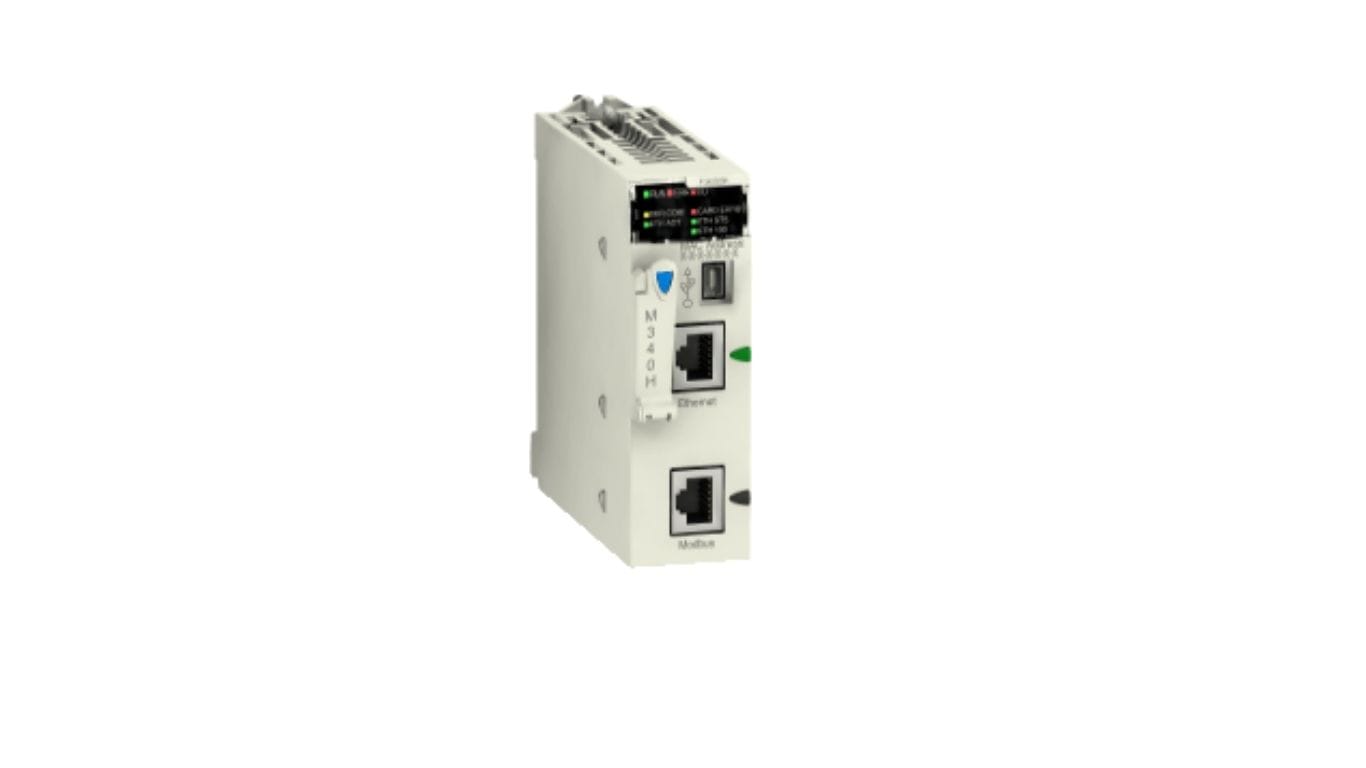
Industrial environments today demand systems that are reliable, scalable, and able to adapt to fast-changing requirements. Automation drives productivity, reduces downtime, and enables smarter decisions across manufacturing, processing, and infrastructure. At the core of this are control platforms built to handle present and future challenges. Solutions like the BMXP342020H processor for Modicon M340 and the BMEH584040 redundant processor for Modicon M580 show how the right control platform delivers performance, flexibility, and resilience.
What Makes a Control Platform Reliable?
Industrial environments are unforgiving. Harsh conditions, fluctuating loads, and continuous operation stress both hardware and software, so a reliable control platform must perform consistently without failure. Reliability rests on:
- Fault tolerance: Operation continues even when individual components fail.
- Environmental protection: Resistance to temperature, vibration, moisture, and electrical noise.
- Robust communication: Dependable data transfer between sensors, actuators, and controllers.
Modern control platforms also use diagnostics and predictive analytics to flag component degradation early, letting teams plan interventions that prevent unplanned outages.
5 Key Features to Look for in Control Platforms
1. Real-Time Processing Power
Industrial control needs real-time decisions — adjusting conveyor speed or furnace temperature without perceptible delay. Real-time processors deliver accurate feedback loops, coordinated machine actions, and stable processes.
2. High-Speed Communications
Control platforms operate within networked ecosystems. High-speed protocols like Ethernet/IP and Profinet reduce latency, provide deterministic network behavior, and support redundant network paths.
3. Redundancy for Mission-Critical Operations
Where failure isn’t an option — power generation, chemical processing — redundant processors and communication channels let a backup take over seamlessly if one component fails, dramatically improving uptime.
4. Scalability and Modularity
A scalable control platform grows from a small installation to a multi-cell operation, adding I/O modules and networks without a complete redesign. This supports incremental expansion, modular upgrades, and flexible, multi-protocol architecture.
5. Future Technology Integration
A good platform meets today’s needs and accommodates tomorrow’s — emerging sensors, AI-driven optimization, and advanced analytics — so engineers integrate new capabilities while preserving existing investment.
Emerging Trends in Industrial Control Technology
- Edge computing and distributed control: As more data is generated near sensors, control platforms increasingly process it locally. Edge computing cuts latency and speeds up safety and process responses.
- Integration with digital twins: A digital twin — a virtual model of a physical system — lets engineers simulate and optimize before making changes, enabling predictive testing, scenario planning, and real-time physical-virtual synchronization.
- Cloud connectivity: Real-time control stays local, but secure cloud integration unlocks analytics, long-term storage, machine-learning models, and cross-site performance comparison.
Comparing Control Platforms in the Market
| Platform | Processing | Redundancy | Protocols | Scalability | Typical Use |
|---|---|---|---|---|---|
| BMXP342020H (M340) | Standard | Optional add-on | Ethernet/IP, Modbus, Profibus | Medium–large via modular I/O | Factory automation, machine control |
| BMEH584040 (M580) | High-perf redundant | Built-in | High-speed Ethernet, fieldbus | High, complex installs | Mission-critical, distributed |
| Competitor A | Standard | Limited | Ethernet/IP | Moderate | General automation |
| Competitor B | High-speed | Optional | Profinet, EtherCAT | High | Robotics, high-speed |
| Competitor C | Modular | Redundant power & CPU | Multiple open protocols | Very scalable | Large process industries |
| Competitor D | Edge controller | Clustered | MQTT, OPC UA | Scales via network | IoT factories, distributed sensors |
How Control Platforms Drive Industrial Innovation
Reliable, scalable control platforms reduce downtime, improve throughput, and ensure consistent quality, turning operational data into actionable insight. They form the foundation layer for digital transformation — smart maintenance, automated quality control, and cross-site synchronization. By enabling precise control and monitoring, they also improve safety and help meet compliance standards, making them central to risk mitigation.
Conclusion
Industrial innovation thrives on platforms that are reliable today and scalable tomorrow. From foundational units like the BMXP342020H processor for Modicon M340 to advanced redundant architectures like the BMEH584040 for Modicon M580, choosing the right control platform measurably improves operational excellence, growth capacity, and readiness for new technology. As industries adopt smart manufacturing, edge computing, and cloud integration, control platforms remain a linchpin of innovation. Explore our Modicon control platform range to build a resilient, future-ready system
What is an industrial control platform?
A control platform is the combined processor, I/O, communication, and software architecture that runs an automation system. It executes control logic, manages data exchange between devices, and provides the reliability and scalability a plant needs to operate continuously.
What makes a control platform reliable?
Fault tolerance (operation continues if a component fails), protection against heat, vibration, moisture, and electrical noise, and robust communication between devices. Built-in diagnostics and predictive analytics add reliability by flagging issues before they cause downtime.
Why is redundancy important in control platforms?
In mission-critical applications like power generation or chemical processing, a failure can be dangerous and costly. Redundant processors and communication channels let a backup take over instantly if a primary component fails, keeping the process running without interruption.
How do control platforms support Industry 4.0 and edge computing?
They act as the local processing and communication layer, handling real-time control on-site while feeding data to edge devices, digital twins, and the cloud for analytics. This enables predictive maintenance, faster safety responses, and data-driven optimization across sites