Distributed Control: 6 Smart Hardware Buying Factors
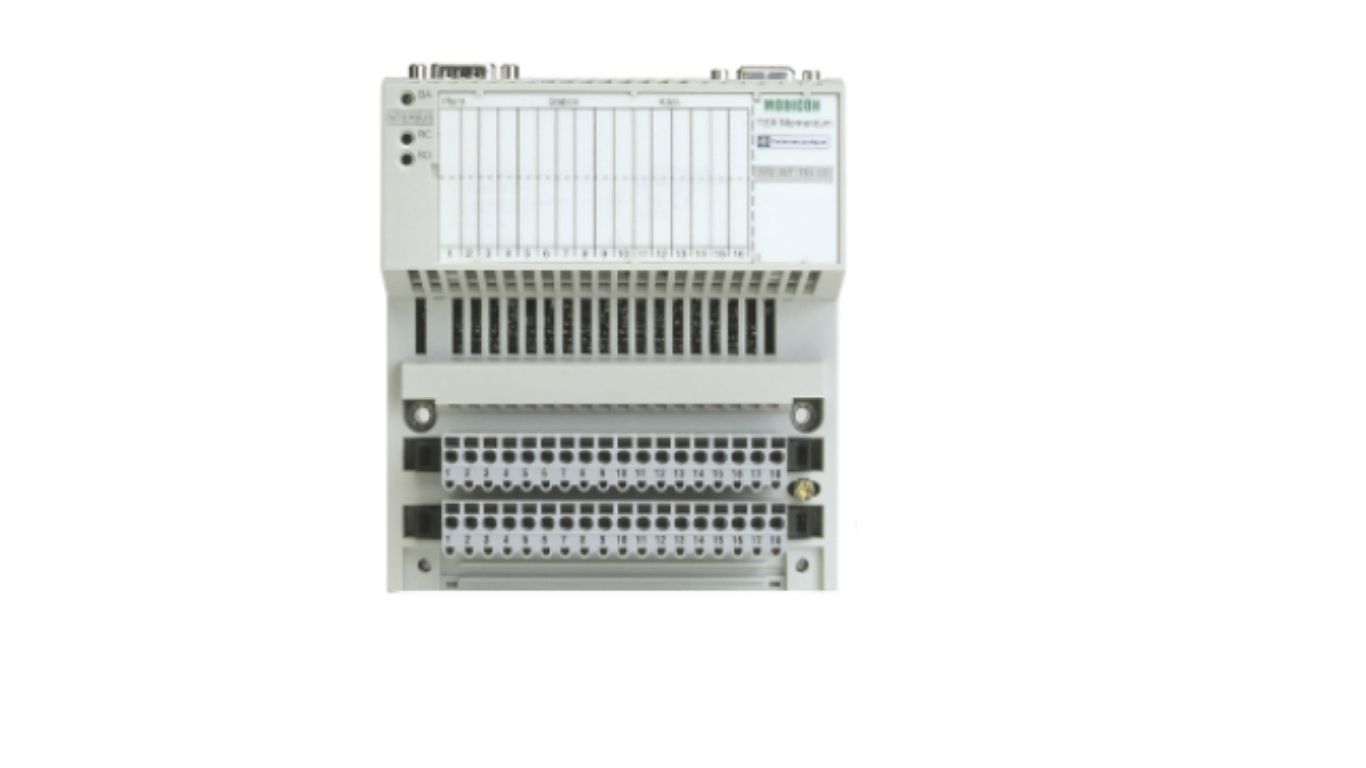
When planning an industrial automation project, it’s tempting to focus only on the high-level concept — but the hardware you choose for distributed control directly affects reliability, flexibility, and long-term maintainability. Identifiers like the 170INT11000 Modicon Momentum communication adaptor and the XBTP022010 compact terminal from Schneider Electric represent the modular components used in distributed control systems, and they show how specialized these parts can be in real deployments.
Below is what engineers, automation specialists, and procurement teams should understand before choosing distributed control hardware — practical considerations, technical factors, and a comparison of market alternatives.
Understanding Distributed Control Architecture
Distributed control systems (DCS) and modular PLC architectures decentralize decision-making across multiple nodes rather than relying on one central controller. This improves resilience and reduces downtime risk from a single point of failure. In distributed control, individual modules process local inputs and outputs, communicating back to central controllers or supervisory systems via industrial protocols like serial fieldbus or Ethernet-based field networks.
How Distributed Control Differs from Centralized
In centralized architectures, all signals are processed in one main cabinet. Distributed control lets nodes — remote I/O modules or localized controllers — perform logic closer to the equipment, reducing wiring complexity and improving reaction time. It also enhances scalability: as production grows, more nodes can be added without overloading a central processor.
6 Key Factors to Evaluate
1. System Compatibility and Integration
Hardware must communicate seamlessly with existing controllers, networking, and supervision tools. Confirm modules support common protocols (fieldbus standards or real-time Ethernet) and integrate with your development environment and supervisory system. Compatibility issues drive up engineering time and project cost.
2. Environmental and Mechanical Requirements
Industrial environments vary widely — extreme temperatures, moisture, vibration, or electromagnetic interference. Choose hardware rated for your conditions, with adequate ingress protection, vibration resistance, and EMI tolerance for long-term reliability.
3. Performance Specifications
Assess data throughput and cycle time to meet real-time requirements, sufficient CPU processing power for complex logic and high-speed I/O, and local intelligence — distributed I/O modules with onboard logic reduce the burden on central controllers.
4. Expandability and Lifecycle Support
Automation systems evolve over years or decades. Hardware supporting modular expansion and long-term component availability protects investment and simplifies maintenance. Ask vendors about product lifecycle policies and spare-part availability.
5. Safety and Compliance
Control hardware must meet relevant standards for your industry and locale (CE, UL, or IEC certifications). Modules with integrated diagnostics and status reporting improve fault detection and help maintain safe operation.
6. Redundancy Options
If uptime is critical, look for hardware that supports redundant power supplies, network paths, and fail-safe communication schemes.
Pros and Cons of Distributed Control Hardware
Advantages
- Improved reliability: Distributing tasks avoids a single point of control, making systems more fault-tolerant.
- Reduced wiring and space: Remote modules near field devices cut cable runs and cabinet space.
- Local processing: Some devices execute logic locally, minimizing network traffic and improving response time.
Challenges
- Network design complexity: Distributed systems require careful planning of protocols and redundancy.
- Higher initial cost: Upfront investment in modular hardware and network infrastructure can exceed centralized systems.
Product Comparison: Communication Adapters and Controllers
| Product | Type | Key Features | Typical Use |
|---|---|---|---|
| 170INT11000 Momentum / XBTP022010 | Communication adaptor | Interbus twisted-pair, ring topology, up to 254 devices | Distributed comms for modular I/O |
| Generic Distributed I/O Module | Comm/I/O node | Multiple protocols (Modbus, PROFIBUS, Ethernet) | Extends I/O near field devices |
| Modular Remote I/O Base | System module | Slot-based expansion, network connectivity | Decentralized I/O for large systems |
| Ethernet Remote I/O with Local Processing | Intelligent I/O | Edge logic over industrial Ethernet | High-speed distributed control |
Competitor entries are generalized categories, not specific brands.
Best Practices for Selection
- Evaluate communication protocol needs. Choose hardware supporting your required network and fieldbus protocols. Open, well-supported standards simplify integration and reduce vendor lock-in.
- Test compatibility first. Before a large purchase, validate integration in a controlled setup with your controllers, supervisory system, and field devices.
- Consider redundancy. Where uptime is critical, prioritize redundant power, network paths, and fail-safe communication.
- Document support and warranty. Assess technical support, firmware update policies, and warranty terms — reliable supplier service significantly reduces downtime.
Conclusion
Choosing distributed control hardware requires careful analysis of system needs, compatibility, environment, and long-term strategy. By understanding the architectural implications and evaluating options against technical requirements, you can design systems that are robust, scalable, and cost-effective. Whether you’re working with components like the 170INT11000 Momentum adaptor and XBTP022010 compact terminal or market alternatives, the goal is to balance performance, reliability, and flexibility for present and future demands. Explore our Modicon distributed control range to build a resilient architecture.
What is a distributed control system?
A distributed control system spreads decision-making across multiple nodes — remote I/O modules and localized controllers — instead of one central processor. Each node handles local inputs and outputs and communicates back over an industrial network, improving resilience and reducing single-point-of-failure risk.
How is distributed control different from centralized control?
Centralized control processes all signals in one main cabinet. Distributed control places logic closer to the equipment, cutting wiring complexity, improving reaction time, and making it easier to scale by adding nodes without overloading a central CPU.
What should I check before buying distributed control hardware?
Verify protocol and system compatibility, environmental ratings (temperature, vibration, EMI, ingress protection), performance specs like cycle time and CPU power, expandability and lifecycle support, safety certifications, and redundancy options.
Is distributed control more expensive than centralized control?
The upfront cost of modular hardware and network infrastructure is often higher. However, reduced wiring, easier scaling, better fault tolerance, and lower downtime frequently make distributed control more cost-effective over the system’s life.