
Failover Design: 5 Proven Principles for Zero Downtime
Industrial operations today demand continuous availability. Downtime is no longer a minor inconvenience — it can result in safety risks, production losses, and reputational damage. To meet these challenges, engineers rely on advanced failover design principles that ensure uninterrupted operation even when individual components fail. This article explores how redundancy, intelligent failover, and modern visualization work together to achieve nonstop performance, using devices like the 140CHS32000 Modicon Quantum Hot Standby splitter kit as reference points.
Why Failover Design Matters for Nonstop Operations
Continuous operation is essential in sectors such as manufacturing, energy, water treatment, and transportation. These environments often run 24/7, and any interruption can have cascading effects across supply chains and critical services. Failover design focuses on maintaining control and visibility under all conditions. Instead of reacting to failures, systems are proactively built to tolerate them, which shifts reliability from being a goal to being a built-in feature.
1. Eliminate Single Points of Failure
A fundamental rule of failover design is the elimination of every single point of failure. Any component — a controller, communication link, or power supply — can fail, so systems must be architected so that no single failure can stop operations entirely. Redundant hardware paths, parallel communication networks, and backup processing units form the backbone of this approach: when one path fails, another immediately takes over without disrupting the process.
2. Ensure Seamless Active-to-Backup Transitions
Failover is only effective if transitions are smooth, because a poorly designed switchover can be as disruptive as a failure itself. Advanced failover design synchronizes data continuously, ensuring that backup components are always ready to assume control. This kind of redundancy engineering) keeps state, memory, and process variables consistent during a switchover, so the process never sees an interruption.
3. Use Hot Standby Architectures
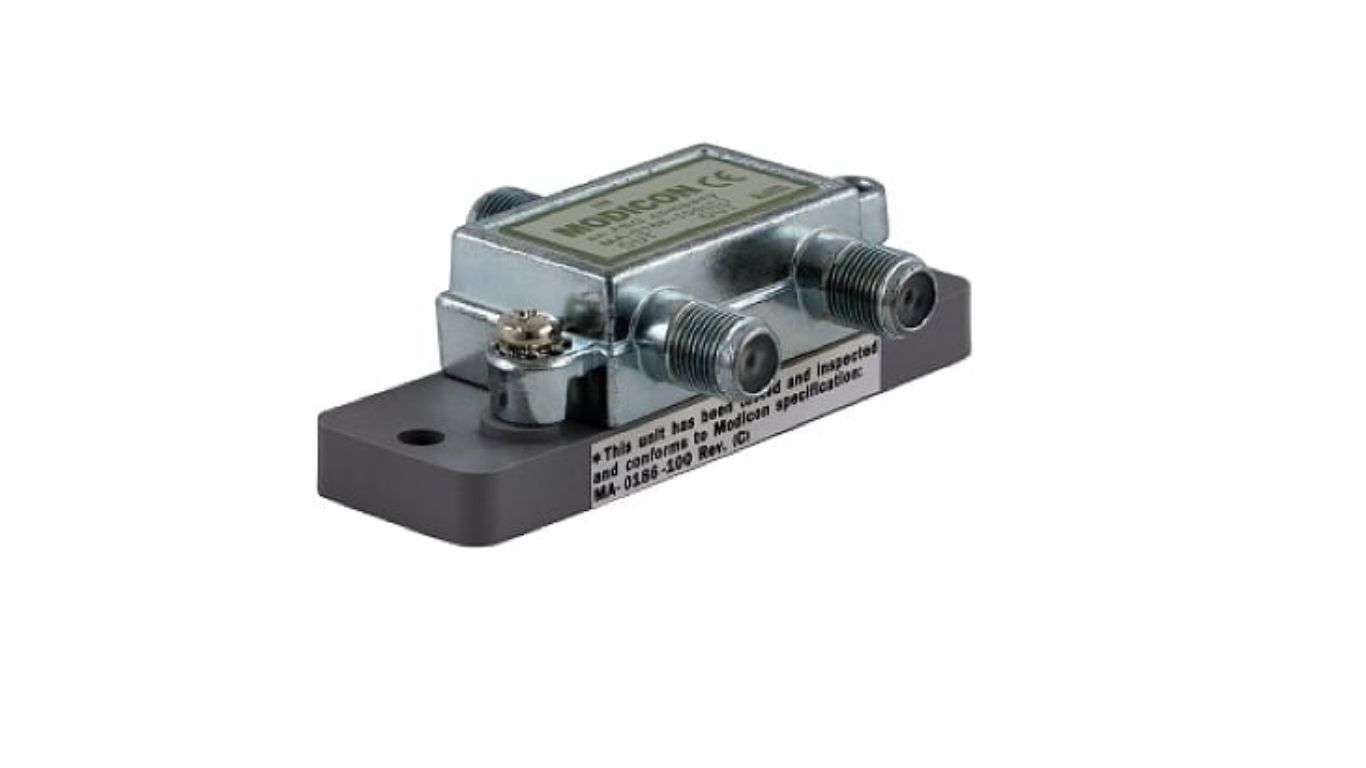
Hot standby configurations involve two or more control units operating simultaneously, with one active and the other monitoring in the background and constantly checking the health of the primary system. When a fault is detected, control is transferred automatically. Components like the 140CHS32000 Hot Standby splitter kit illustrate how synchronized communication paths enable this rapid transition. The benefits are significant: zero or near-zero downtime during failures, reduced risk of data inconsistency, and improved system confidence and operator trust — especially valuable in safety-critical processes where even milliseconds matter.
4. Build Communication Redundancy and Synchronization
Communication networks are often more vulnerable than processing units. Cable damage, electromagnetic interference, or switch failures can interrupt data flow, so failover design includes dual communication channels that operate simultaneously or remain on standby, with intelligent switching that automatically reroutes traffic when faults are detected. Synchronization ensures all components share the same operational context; time stamping, deterministic data exchange, and real-time diagnostics maintain consistency between active and standby systems, preventing incorrect outputs or unsafe states.
5. Strengthen Operator Awareness with Visualization
Failover systems are not only about hardware and logic — they also depend on human awareness, since operators must understand system status instantly to make informed decisions. Modern interfaces like the HMIDT952 Harmony GTU 18.5-inch display present system health, alarms, and redundancy status clearly. During failover events, operators should immediately see which system is active, why a switchover occurred, and whether redundancy is fully restored, so displays must prioritize clarity over complexity with clear visual cues and alarm prioritization.
Testing and a Culture of Reliability
A failover design is only as strong as its testing process. Simulated failures — such as power loss, network interruption, or processor faults — validate whether the system behaves as intended, and regular testing ensures standby components remain functional and that switching logic has not been compromised by configuration changes. Reliability is also organizational: proper documentation, operator training, and lifecycle planning help teams trust automation and respond effectively when anomalies occur.
Conclusion
Advanced failover design is essential for achieving nonstop industrial operations. By eliminating single points of failure, implementing hot standby architectures, ensuring communication redundancy, and enhancing operator awareness through effective visualization, organizations can significantly reduce downtime risk. Technologies like the 140CHS32000 Hot Standby splitter kit and the HMIDT952 display highlight how synchronized control and clear human-machine interaction support these goals. Browse our Quantum Hot Standby and HMI range to design for zero downtime.
What is failover design in industrial control?
Failover design is the practice of building control systems so they keep running when a component fails. It uses redundant hardware, parallel networks, and backup processors that take over automatically, so production continues without interruption.
What is a hot standby architecture?
Hot standby runs two control units at once — one active, one continuously synchronized and monitoring the primary. If the primary fails, control transfers automatically with near-zero downtime, because the standby already mirrors the primary’s state and process data.
How does communication redundancy work?
Communication redundancy provides dual network paths that run simultaneously or on standby. Intelligent switching reroutes traffic the moment a fault is detected, and synchronization keeps both paths consistent so no data is lost during the switchover.
Why is operator visualization part of failover design?
Failover depends on human awareness as well as hardware. Clear HMI displays show which system is active, why a switchover happened, and whether redundancy is restored, so operators can make fast, correct decisions during abnormal conditions.


One Comment
Comments are closed.