Industrial Control Systems: 6 Essential Features for High-Speed Production
Modern industrial control systems have rapidly transformed manufacturing. Production environments are becoming faster, smarter, and more interconnected, and to keep pace, plants must adopt control systems that are both reliable and adaptable. Future-ready industrial control systems deliver the performance, scalability, and flexibility today’s operations demand.
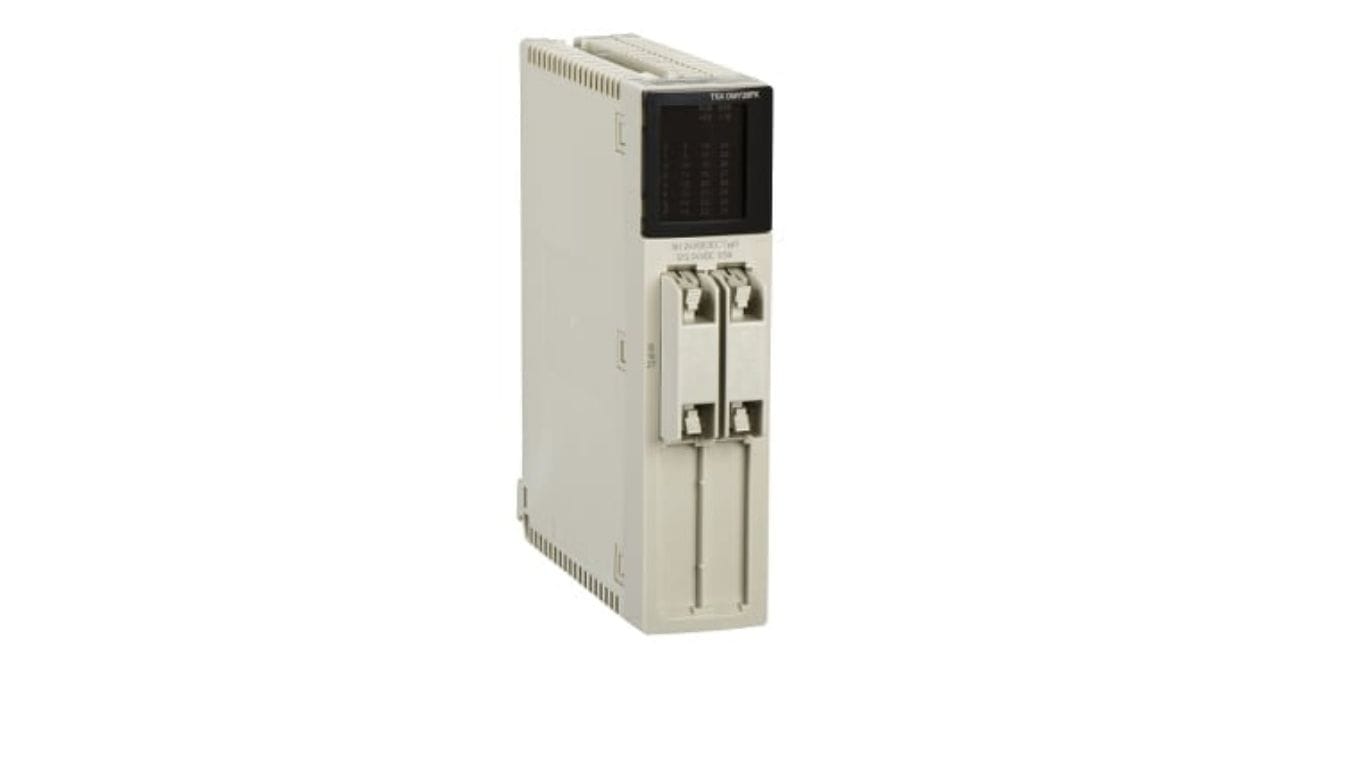
Key components such as the TSXDMY28RFK Modicon Automation platform and the 170ADM54080 Modicon Momentum Modbus I/O module base show how robust frameworks and modular Modicon hardware dramatically improve efficiency and uptime.
The Evolution of Industrial Control Systems
Industrial control systems began as simple programmable logic controllers (PLCs) running basic logic routines. Over time, complexity grew, demanding systems that could handle real-time data processing, networked communications, and distributed I/O to synchronize equipment across entire production lines.
Today’s control solutions integrate machine control, data acquisition, and system diagnostics in one platform — all essential for high-speed environments where seconds of delay translate into real cost.
6 Key Features of Future-Ready Industrial Control Systems
1. Scalable Architecture
Scalability lets manufacturers start with a basic setup and expand as needed. Platforms like the TSXDMY28RFK Modicon automation range act as the central backbone, coordinating control logic, networking, and data handling across a facility.
2. Modular I/O for Flexible Control
Hardware-level adaptability matters just as much. The 170ADM54080 Modicon Momentum Modbus I/O module base offers a modular input/output structure, so engineers can add or replace modules to match production needs without overhauling the system. These bases support varied input types, integrating with sensors, actuators, and field devices.
3. High-Speed Communication Protocols
Efficient data exchange drives rapid response. Protocols like Modbus, EtherNet/IP, and fieldbus technologies keep components communicating reliably with low latency. Advanced platforms support multiple standards, improving interoperability across hardware modules.
4. Real-Time Monitoring
Real-time monitoring gives visibility into equipment performance and system health. Control platforms gather data from connected I/O modules and sensors to enable:
- Predictive maintenance to reduce unplanned downtime
- Performance optimization to increase throughput
- Quick troubleshooting to resolve issues before they escalate
5. Reliability and Redundancy
Industrial operations need systems that stay online under strain. Modern industrial control systems use redundancy and fault-tolerant design, and with modular components like the Momentum I/O base, individual modules can be serviced with minimal disruption. Built-in diagnostics catch hardware or communication issues early, increasing resiliency.
6. Easy Integration and Design
A future-ready control system requires careful planning for immediate needs and future expansion. Modular I/O bases let systems adapt without costly redesigns, while integrated software environments handle programming, monitoring, and configuration. Pairing these platforms with Schneider Electric components keeps the ecosystem consistent.
Implementing Industrial Control Systems in High-Speed Lines
Deploying advanced industrial control systems also depends on training. Operators and maintenance staff should know both the hardware and software, which reduces downtime and enables quick responses to alerts so production never stalls over minor issues.
Comparison Table: Control Products and Competitors
| Product | Type | Function | Communication | Notes |
|---|---|---|---|---|
| 170ADM54080 Momentum I/O base | Modular I/O Base | Configurable I/O for control systems | Modbus | Flexible base for varied I/O needs |
| Analog Input Base | I/O Module | Handles analog signals for precise measurement | Standard protocols | Supports multiple analog ranges |
| 170ADO54050 Discrete Output | I/O Module | Switches output loads | Modbus | Controls actuators and outputs |
| 170ADM35011 Discrete I/O Base | I/O Module | Mixed discrete input/output | Standard automation | Combined I/O needs |
| 170ADM35010 I/O Base | I/O Module | Discrete I/O with status LEDs | Standard protocols | Compact discrete solution |
| Other Fieldbus I/O Systems | Competitor | Multi-protocol modular I/O | EtherNet/IP, Profibus | Flexible for different networks |
This modular ecosystem is what makes flexible industrial control architectures possible.
Conclusion
Future-ready industrial control systems are essential for high-speed production. Combining powerful platforms like the TSXDMY28RFK Modicon Automation platform with modular hardware such as the 170ADM54080 Momentum I/O base delivers scalability, real-time communication, and robust performance. Designing for modularity lets manufacturers build lines that adapt to change — minimizing downtime and maximizing output. Explore our full range of industrial control hardware to build a system that keeps you competitive.
Frequently Asked Questions
What are industrial control systems? Industrial control systems are the combined hardware and software — PLCs, I/O modules, communication networks, and monitoring tools — that automate and manage machines and processes in a plant. They handle control logic, data acquisition, and diagnostics to keep production running reliably.
What is the difference between a PLC and an industrial control system? A PLC is one component that executes control logic. An industrial control system is the wider architecture that includes the PLC plus I/O modules, networks, HMIs, and diagnostic software working together to run an entire line.
Why is modular I/O important in industrial control systems? Modular I/O, like the Momentum base, lets engineers add, swap, or service individual modules without rebuilding the whole system. This cuts downtime, lowers cost, and makes the system easy to scale as production needs change.
Which communication protocols do industrial control systems use? Common protocols include Modbus, EtherNet/IP, Profibus, and other fieldbus technologies. Many modern platforms support several at once for low-latency, interoperable data exchange across mixed hardware.
How do industrial control systems reduce downtime? Through redundancy, fault-tolerant design, real-time monitoring, and predictive maintenance. Built-in diagnostics flag faults early, and modular components can be replaced quickly, so issues are resolved before they stop production.