Modicon Momentum I/O Parts: Matching Modules to Your 170-Series Rack
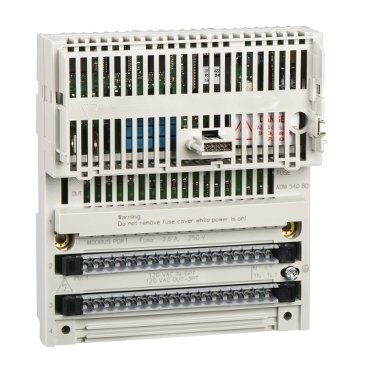
Momentum I/O modules in the 170-series aren’t fully interchangeable just because they share a similar block size. Channel count, signal type, and communication adapter protocol all need to match your existing configuration exactly. Check the part number off the module itself before ordering a replacement.
Momentum is an older but still widely deployed Modicon I/O platform. A lot of facilities have 170-series blocks running quietly in the field, mounted directly on equipment rather than in a central panel, which makes them easy to forget about until one fails.
Why Momentum I/O Parts Trip People Up
Because Momentum modules mount in distributed locations rather than one central rack, the documentation on them tends to be thinner than what you’d have for a Quantum or M340 system sitting in the main panel. By the time one fails, the original spec sheet is often long gone.
That’s exactly why sourcing Modicon Momentum I/O parts takes a bit more care. You’re frequently working from the part number alone, with no backup documentation to confirm channel count or signal type.
170-Series Modules Compared
| Model | Module Type | Typical Channel Count | Signal Type |
|---|---|---|---|
| 170ADM54080 | Discrete I/O | ~32 points | Mixed digital in/out |
| 170AAI03000 | Analog input | ~8 channels | Analog input |
| 170AAO92100 | Analog output | ~2 channels | Analog output |
| 170DNT11000 | Communication adapter | 1 network port | DeviceNet |
Channel counts and configurations vary by exact revision. Confirm against the physical module’s nameplate before ordering a replacement.
1. Pull the Full Part Number, Not Just the Prefix
“170ADM” covers a range of different configurations within that family. The digits after the prefix determine channel count and voltage class, and those details matter as much as the prefix itself. Read the complete part number off the module, not from memory or an old wiring diagram.
2. Confirm the Communication Adapter Protocol Matches
Momentum blocks typically connect through a network adapter, DeviceNet, Modbus Plus, or Profibus, depending on the installation. Swapping in a module with the wrong adapter protocol means it simply won’t talk to the rest of your system, even if the I/O portion is otherwise correct.
3. Check Mounting and Field Wiring Before Ordering
Since these modules often mount directly on or near equipment rather than in a central panel, physical mounting style and connector type matter just as much as the electrical specification. Confirm the mounting footprint matches before you commit to an order, especially if you’re working from a part number alone without the original installation on hand to compare.
4. Buy From a Supplier Who Can Help Identify Partial Part Numbers
Faded or partially worn nameplates are common on field-mounted Momentum blocks that have been out in the elements for years. A supplier familiar with the platform can often help narrow down the exact module from a partial number and a description of the application.
For general background on the Momentum platform and its place in the Modicon lineup, Schneider Electric’s own Modicon product documentation is the most reliable source for exact specs by model.
Frequently Asked Questions
Q: Why is my Momentum module’s part number hard to read? A: Field-mounted I/O blocks are often exposed to more dust, moisture, and physical wear than panel-mounted equipment, which fades nameplates faster. A supplier can sometimes help identify a module from a partial number and known application details.
Q: Can I replace a DeviceNet communication adapter with a different protocol? A: Only if you’re also changing how the rest of your system communicates with that I/O block. Otherwise, the replacement needs to match the original protocol to maintain compatibility with your existing network.
Q: Are Momentum I/O blocks still a supported Modicon platform? A: Many Momentum modules are considered mature or discontinued at this point, which is part of why sourcing replacement parts through the secondary market has become common for facilities still running them.
Q: How do I know if a Momentum module is analog or discrete without a clear nameplate? A: The connector and terminal layout often give it away, discrete modules usually have more individual terminal points for digital signals, while analog modules have fewer terminals dedicated to higher-precision signal wiring. When in doubt, cross-reference the visible part number fragments with a supplier.
Sourcing Modicon Momentum I/O parts correctly means reading the full part number, not just the family prefix, and confirming both signal type and communication protocol before ordering. Field-mounted modules are harder to document, so a supplier who knows the platform is worth the extra conversation.