How Modular Electrical Components Improve Automation Panel Efficiency Today
Automation panel design has shifted dramatically over the past two decades. Where engineers once hardwired fixed-function controllers into custom enclosures, most modern panels are now built around modular platforms that let individual components be added, swapped, or scaled without redesigning the entire system. That shift has real, measurable effects on efficiency — both during initial panel build and over the life of the installed system.
What “Modular” Actually Means in Panel Design
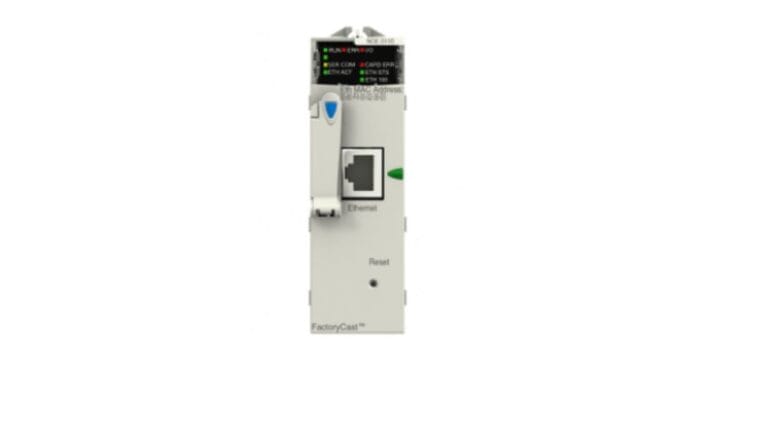
A modular electrical system is built from standardized components — I/O modules, communication modules, power supplies, and CPU racks — that mount onto a common backplane or rail and communicate over a shared bus. Instead of one monolithic controller handling every function, discrete modules each handle a specific task: digital input, analog output, communication, or power distribution.
Platforms like the Modicon M340 and the broader Modicon product family are built on exactly this principle, allowing a panel to be configured with only the I/O density and communication protocols a given application actually needs.
Faster Panel Build and Commissioning
Because modular components are pre-engineered and standardized, panel builders spend less time on custom wiring and more time on configuration. A discrete I/O module such as the BMXDDI1602 or an analog module like the TM3AI4 can be mounted, wired, and configured in a fraction of the time it takes to design a custom terminal block layout for the same functionality.
This also shortens commissioning. Since each module has a known, documented behavior, technicians can isolate faults to a single module rather than tracing an entire wiring harness.
Easier Scaling as Requirements Change
Production requirements rarely stay static. A modular architecture lets a facility add I/O capacity, additional communication ports, or new sensor types by inserting an additional module onto the existing rack — rather than replacing the entire controller. This is particularly valuable in facilities that expect to add machines, sensors, or production lines over a multi-year horizon.
Discrete output modules such as the BMXDDO1602 can be added incrementally as a line expands, without disturbing modules that are already commissioned and running.
Simplified Troubleshooting and Reduced Downtime
When a fault occurs in a modular system, diagnostic LEDs and module-level status indicators typically point directly to the affected component. Maintenance teams can swap a single failed module — rather than taking an entire control cabinet offline — which dramatically reduces mean time to repair. This principle is discussed in more depth in our overview of PLC hardware and its key components.
Standardization Reduces Spare Parts Complexity
Facilities running modular platforms across multiple lines can standardize on a smaller set of module types, reducing the spare parts inventory required to support operations. Instead of stocking unique replacement parts for a dozen different fixed-function controllers, a plant can maintain a shared inventory of common I/O and communication modules that fit multiple systems.
Cost Efficiency Over the System Lifecycle
While modular components can carry a modest premium over fixed-function alternatives at initial purchase, the lifecycle cost is typically lower once reduced engineering time, faster commissioning, simpler troubleshooting, and lower spare-parts overhead are factored in.
Frequently Asked Questions
Q: Are modular automation panels more expensive to build than fixed-function panels? A: Initial component costs can be similar or slightly higher, but engineering, wiring, and commissioning time is typically lower, which often reduces total build cost.
Q: Can modular I/O modules from different generations be mixed on the same rack? A: Compatibility depends on the specific platform and backplane. Always verify module compatibility with the manufacturer’s system architecture before mixing generations.
Q: How do modular systems affect troubleshooting time? A: Because faults are typically isolated to a single module with dedicated status indicators, troubleshooting time is usually reduced compared to diagnosing a fixed-function controller.
Q: What’s the difference between discrete and analog I/O modules? A: Discrete modules handle on/off signals (like a sensor or relay), while analog modules handle variable signals such as 4–20mA or 0–10V readings from instruments.