Altistart Soft Starters: How to Match Amperage Rating to Your Motor
Your soft starter just tripped, and now the line is down. You don’t have time to read a full datasheet. You need to know, fast, whether the part in front of you is actually the right fit before you order it and wait another day.
This guide gets straight to it: how to read an Altistart soft starters rating, match it to your motor, and confirm you’re ordering the right one the first time.
Why Getting the Size Wrong Costs You Twice
An undersized starter trips on overcurrent almost immediately. That means a second failure, a second order, and another day of downtime you didn’t budget for.
An oversized starter won’t trip, but it costs more than it needed to, and in some cases loses precision in its control range. Either mistake sets you back. Getting Altistart soft starters sized right the first time is the difference between fixing this today and fixing it twice this week.
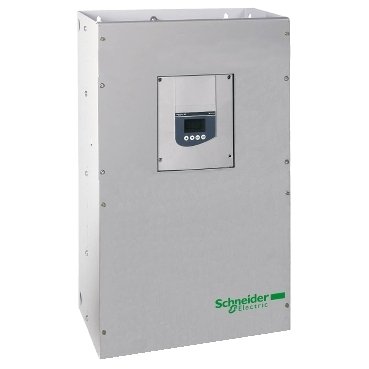
ATS48 Current Ratings Compared
Check your motor’s nameplate against this table before you order anything.
| Model | Rated Current | Typical Motor Power (400V, 3-phase) | Frame Size |
|---|---|---|---|
| ATS48C11Y | 11 A | ~5.5 kW / 7.5 HP | Compact |
| ATS48C41YU | 41 A | ~22 kW / 30 HP | Mid-size |
| ATS48C66Y | 66 A | ~37 kW / 50 HP | Larger frame |
These are typical ratings for standard duty. Confirm exact values against your motor’s nameplate and Schneider’s official datasheet, since voltage class and duty cycle can shift the numbers slightly.
1. Match Current Rating to Full-Load Amps, Not Horsepower
Horsepower alone won’t tell you what you need to know. Full-load amps (FLA), printed right on the motor nameplate, is the number that actually matters. Two motors with the same horsepower can pull different current depending on voltage and efficiency.
Size the starter to your motor’s FLA, with margin for your duty cycle. Don’t rely on a horsepower chart alone if you can check the actual nameplate.
2. Check Your Starts-Per-Hour Before You Order
If your process starts and stops often, conveyors and pumps with frequent cycling are the usual suspects, a standard-duty rating may not hold up. This is often the real reason a soft starter that “should” be the right size keeps tripping anyway.
If your old unit was already undersized and just hadn’t failed yet, replacing it with the exact same model repeats the same problem. Worth flagging before you reorder.
3. Confirm Bypass Contactor Compatibility
If your existing setup uses a bypass contactor once the motor reaches full speed, make sure the replacement supports the same configuration. Otherwise you’re looking at rewiring the bypass circuit on top of everything else, and that’s extra time you don’t have during an unplanned outage.
4. Buy From a Supplier Who Can Confirm Fit and Testing Before You Order
You’re not shopping around for the cheapest price right now. You need to know the part is correct and that it’s been tested before it ships, not something you find out after it’s already installed and the line is still down.
ATS48 part numbers encode voltage class and current rating together, so a supplier who knows the platform can confirm the exact match over the phone or by email before you commit. Ask directly whether the unit has been bench-tested, not just visually inspected.
For general background on how these devices control motor starting, the Wikipedia overview of soft starters is a useful primer, and Schneider Electric’s own Altistart product documentation is the best source for exact specs if you have time to dig deeper.
Frequently Asked Questions
Q: Can I use a soft starter rated higher than my motor needs, just to get something shipped today? A: Yes, oversizing is generally safe and won’t damage the motor. It costs more than an exact match, but it’s a reasonable move if you need to get the line running now and can source the correct size later.
Q: How do I find my motor’s full-load amps if the nameplate is worn or missing? A: Look up the motor’s datasheet using the model number, or call the manufacturer directly. Full-load amps is standard published information tied to horsepower, voltage, and efficiency.
Q: Does a soft starter replace a circuit breaker or overload relay? A: No. It controls ramp-up and ramp-down only. You still need separate short-circuit and overload protection upstream, per your electrical code.
Q: My “correctly sized” soft starter still trips. What am I missing? A: Check the duty cycle and starts-per-hour setting first. A starter can be sized right for continuous running but still trip if your process cycles it more often than its rated duty allows.
When a soft starter fails, you need a fast, confirmed match, not a guessing game. Check your motor’s FLA against the table above, confirm duty cycle and bypass compatibility, and get a supplier to verify the exact part and its test status before it ships.